
Custom solid carbide tools
Custom solid carbide tools are made for machining needs that standard tools cannot solve cleanly, consistently, or economically. Whether you need custom cutting tools for a difficult material, a compact part feature, a tighter cycle, or a combined operation, the goal is simple: create a special tool geometry that fits the job instead of forcing the job to fit the tool. Mikron Tool is known for high precision carbide tooling, and here you’ll learn how to specify, configure, and request the right solution.
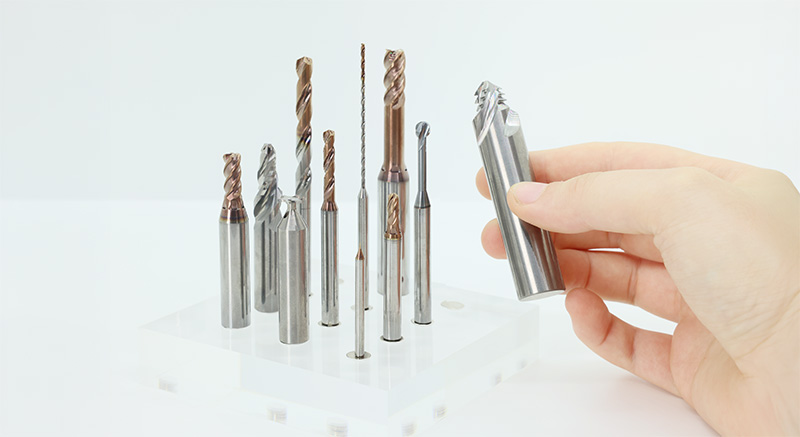
What can custom solid carbide tools do for your operation?
Custom solid carbide tools can combine the cutting edges, flute form, coating, length, diameter, coolant concept, and shank configuration your process actually needs. Instead of using multiple standard tools, adjusting offsets repeatedly, or accepting marginal chip control, custom tools are designed around the component, material, machine, and production target. The result can be a more stable process, cleaner features, fewer tool changes, and a clearer route from prototype to repeatable production.
These specialized tools are especially useful when the part has a feature that is hard to reach, a tolerance request that leaves little room for tool deflection, or a material that punishes general-purpose geometry. A single solid carbide bit may be designed to drill, step, chamfer, radius, spot, interpolate, or finish a specific form, depending on what the application requires. That makes custom tooling valuable not only for high-volume production, but also for demanding small-batch work where scrap is expensive.
In a nutshell, the main reasons to choose special tools are:
- Inventory and Workflow Simplification
- Shorter Cycle Time
- Improved Precision
- Process Stability and Reliability
- Reduced setup time
- Reduced inspection time
- Reduced Scraps
- Reduced post machining operations
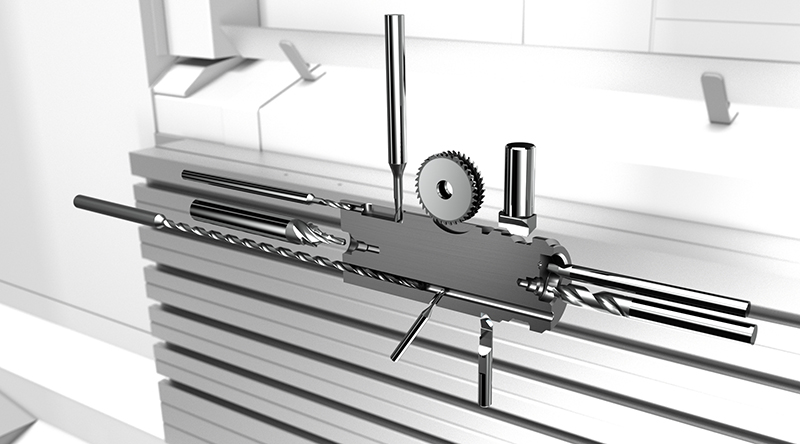
Designed around your part, not a catalogue compromise
The strongest reason to choose customized tools is control. For example, a standard cutter may be close to what you need, but “close” can still mean extra passes, unstable chips, burrs, premature wear, or a finish that needs secondary work. With custom solid carbide tools, each design choice is connected to a machining outcome.
A typical tool design may define:
- Cutting diameter and pilot geometry for the exact hole, profile, or feature.
- Tip angle, corner radius, or step form to match the component shape and reduce extra operations.
- Flute count, length or angle to balance chip evacuation, rigidity, and feed capability.
- Overall length and reach so the tool can access the feature without unnecessary overhang.
- Internal or external coolant strategy where heat, chip packing, or deep features are concerns.
- Coating or edge preparation selected for wear resistance, material behavior, and surface finish.
- The latest generation carbide grades allow significantly higher cutting speeds and feed rates, increasing productivity and machining efficiency.
- Shank style and clamping length to support runout control and process stability.
This is where custom cutting tools move beyond simply being “non-standard.” They become process tools. The design is not only about the custom cutter shape; it is about how the cutter enters the material, forms the chip, clears the chip, resists vibration, and leaves the finished surface with the required quality and tolerances.
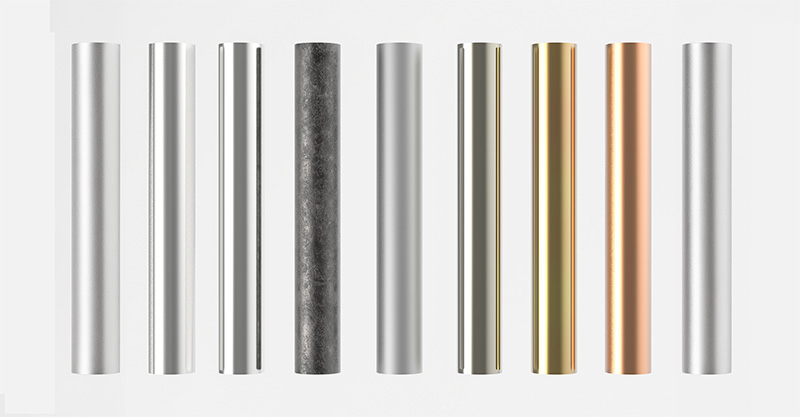
Workpiece material
Workpiece material is usually one of the first criteria that influence the tool design, as materials behave differently during the machining process. A custom tool can be adapted to specific material properties that make it difficult to machine, such as high ductility, low thermal conductivity, and high toughness instead of relying on a general-purpose geometry. The main materials that can be tackled with Mikron Tool’s custom tooling solutions are:
- Steel, corrosion-resistant steels, i.e. stainless steels
- Titanium / titanium alloys
- Super alloys and heat-resistant alloys such as Inconel or Hastelloy
- CoCrMo alloys
- Hardened steel up to 55HRC
- Non-ferrous materials, including aluminium / aluminium alloys, brass,
lead-free brass, copper, gold, etc. - Cast materials
Available types of cooling technology and shafts
All special tools can be designed according to the specific application needs or the existing machine configuration. Cooling can be:
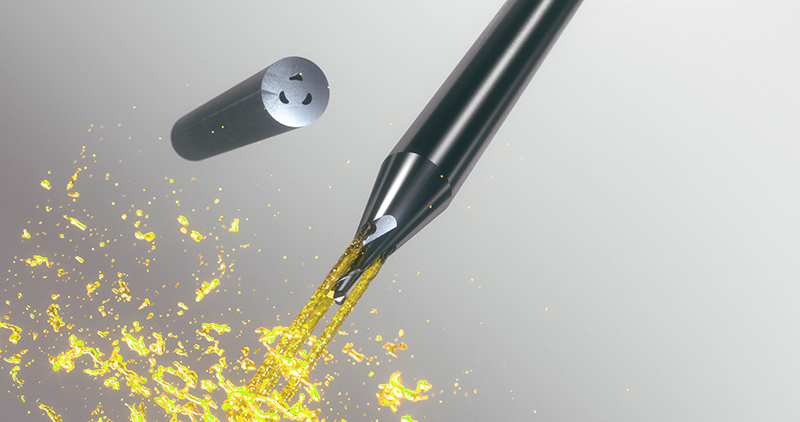
- Straight internal cooling ducts in the shaft
- Internal straight cooling channels
- Internal helical cooling channels
- Internal cooling channels with special exit, for example, through flutes
- External coolant supply
Mikron Tool’s custom round tools are engineered according to the specific requests and needs of each customer. The special solid tools are available with the following types of shafts:
- Cylindrical as per DIN 6535 HA
- Cylindrical as per DIN 6535 HB (Weldon)
- Cylindrical as per DIN 6535 HE (Whistle Notch)
- Clamping face for turning tools
- Others upon request
Tooling options for demanding applications
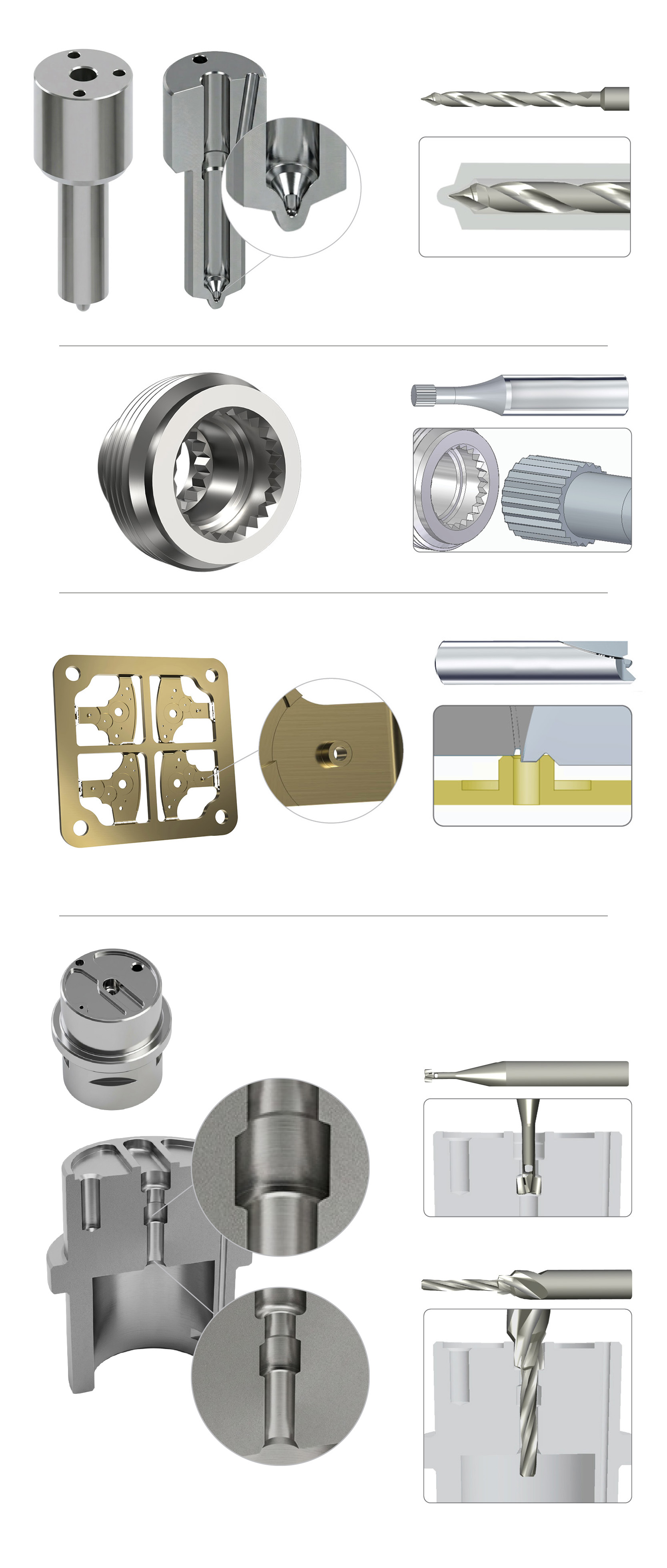
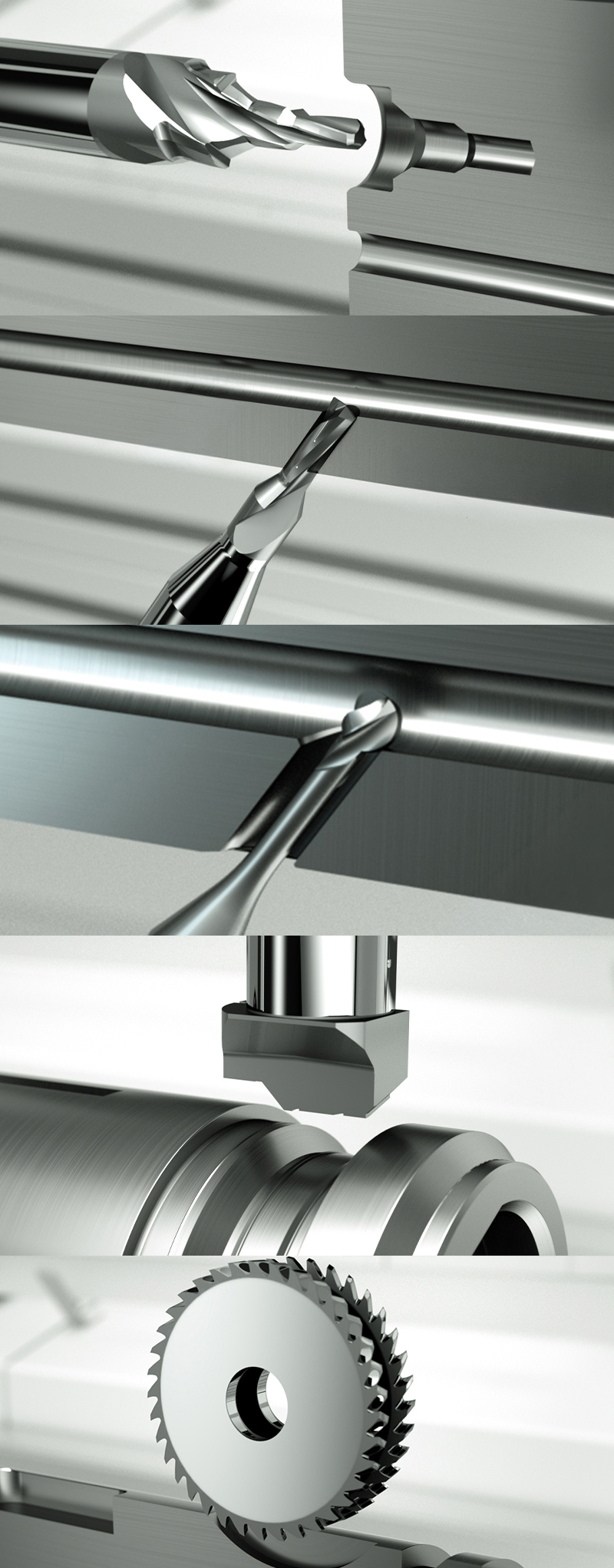
Custom carbide cutting tools can be developed for drilling, milling, reaming, chamfering, deburring, engraving, profiling, finishing, and combined operations. The best option depends on whether the application is limited by access, tool life, surface quality, burr control, dimensional accuracy, or cycle time. For example, a stepped drill with a chamfer can remove separate drilling and chamfering operations, while a special end mill profile can finish a form that would otherwise require multiple passes.
Common custom tooling applications include:
- Milling, Form milling, Profile milling, Combined milling for slots, pockets, contours, thin walls, and hard-to-reach surfaces.
- Disc milling, Profile disc milling
- Centering & Pilot drilling, Drilling, Step drilling, Form drilling
- Reaming, Step reaming, Form reaming for applications that demand particularly high dimensional accuracy, roundness, or surface quality
- Chamfering, Deburring
- Turning, Form turning, Combined turning, Grooving, Profile grooving
- Multifunctional Tools for combined applications, to merge two or more operations into one controlled cut.
Examples of custom multi-functional tools
Multi-functional tools are one of the most common way to save time and money with custom tooling solutions. Some of the potential combinations are:
1. Centering + Drilling
2. Centering + Drilling + Reaming
3. Drilling + Reaming
4. Drilling + Form Drilling
5. Milling + Deburring
6. Drilling + Milling
These are just a few examples. Many other configurations can be tailored to meet each customer’s specific needs.
A practical customization process
A good custom tooling project starts with the part feature and works backward to the tool. The more clearly the application is described, the more precise the recommendation can be. You do not need to have every tool detail solved before you ask; the important first step is to share the machining application or problem, the desired result, and the limits of the current setup. The more clearly the machining environment is defined, including machine type, coolant, workpiece clamping, and other relevant conditions, the easier it is to develop a solution that meets the customer’s specific requirements.
The process usually follows a clear path:
- Application review: Identify the feature, material, machine type, holder condition, coolant availability, batch size, and current pain point.
- Tool concept: Define whether the solution should be a special drill, mill, reamer, form tool, or multi-functional tool.
- Geometry selection: Set the cutting profile, lengths, angles, radii, flute design, edge treatment, and coolant approach.
- Material and coating choice: Match the solid carbide grade and surface treatment to the workpiece and wear mode.
- Quotation and pricing: Price depends on design complexity, diameter, length, coating, quantity, and required documentation.
- Manufacture and validation: The finished tool is checked against the agreed design so it can be tested under real cutting conditions.
For repeat work, the final design can often become a product reference for reordering. That helps purchasing, programming, and production teams keep the same tool concept in place instead of rebuilding the solution from scratch.
Built for production value, not just uniqueness
Special tools should earn their place in the process. A custom cutter is worthwhile when it reduces uncertainty, shortens a sequence, improves consistency, reaches a feature more safely, or makes a difficult part easier to control. The value is not that the tool is special, it is that it removes a specific limitation.
To make a simple example, consider a part that currently needs a drill, a chamfer tool, and a finishing pass to complete one hole feature. If the setup allows it, a custom solid carbide step tool may create the hole, finish, and chamfer in one controlled operation, reducing tool changes and simplifying the program. In another case, a long-reach standard tool may chatter, while a purpose-designed geometry with only the necessary reach can improve rigidity and chip flow.
These improvements are application-specific, so claims should be based on testing and real process data. The right conversation is not “What is the most advanced tool?” but “What is the tool that makes this part easier, cleaner, and more repeatable?”
Request custom tooling with the right details
To get a useful recommendation for custom solid carbide tools, share the practical information that affects design and pricing. A clear request helps avoid assumptions and speeds up the path to a workable proposal.
Prepare these details if available:
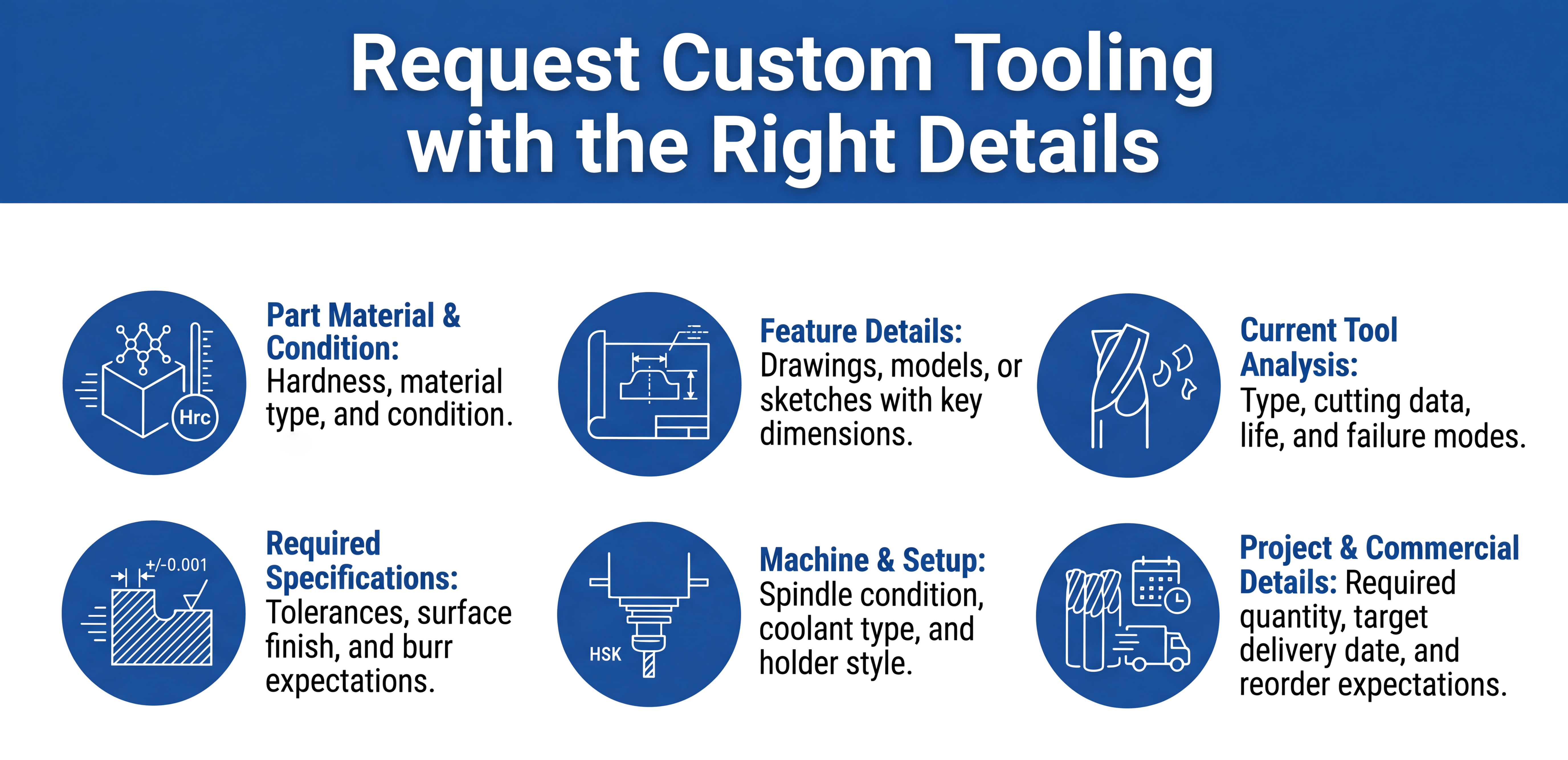
If you are not sure which geometry is best, start with the problem rather than the tool type. Ask for customizable tools that match the feature, the machine, and the production goal. The next step is to submit your application details and request a quotation for custom tools built around your part.
Are you facing challenges in your machining operations?
Contact us and let’s discuss your application to find the right solution.
Frequently Asked Questions (FAQs)
1. What are custom solid carbide tools, and when should I use them?
Custom solid carbide tools are precision-engineered cutting tools designed specifically for complex machining challenges that standard off-the-shelf tools cannot resolve efficiently. You should use custom cutting tools when working with difficult materials, tight tolerances, hard-to-reach features, or when you want to combine multiple operations (such as drilling and chamfering) into a single pass to reduce cycle times and scrap.
2. What types of operations can be performed using custom carbide cutting tools?
Custom tooling can be developed for a wide array of machining applications, including:
- Milling (form, profile, slot, and contour milling)
- Centering and pilot drilling
- Step drilling and form drilling
- High-precision reaming (step and form reaming)
- Chamfering and deburring
- Turning, grooving, and profile turning
- Multi-functional operations (merging two or more operations into one tool)
3. What workpiece materials can Mikron Tool machine with custom tools?
Mikron Tool’s custom solid carbide bits and cutting solutions are engineered to handle challenging materials that cause premature wear on general-purpose geometries. These include:
- Stainless steels and corrosion-resistant steels
- Titanium and titanium alloys
- Super alloys and heat-resistant alloys (e.g., Inconel, Hastelloy)
- CoCrMo alloys
- Hardened steel (up to 55 HRC)
- Non-ferrous metals (aluminium, brass, lead-free brass, copper, gold, etc.)
- Cast materials
4. How do multi-functional custom tools save time and production costs?
Custom multi-functional tools merge multiple sequential machining steps into a single tool, eliminating unnecessary tool changes and repeated setup times. Popular configurations include but are not limited to Centering + Drilling, Drilling + Reaming, Milling + Deburring, and Drilling + Form Drilling. This optimization significantly shortens cycle times, simplifies CNC programs, and improves overall process stability.
5. What cooling and shaft options are available for custom round tools?
To match your machine configuration and application needs, specialized tools can be designed with various cooling technologies, including straight internal cooling shafts, internal helical channels, or special exits through the flutes, as well as external coolant supplies. Available shaft styles include cylindrical configurations complying with DIN 6535 standards (HA, HB/Weldon, HE/Whistle Notch), clamping faces for turning tools, and custom designs upon request.
6. What information is needed to request a quote for custom milling cutters or drills?
To receive a precise recommendation and quote for custom cutting tools, it is helpful to provide:
- The workpiece material and its hardness/condition
- A feature drawing, 3D model detail, or sketch with key dimensions
- Required dimensional tolerances, surface finish expectations, and burr control goals
- Details on your current tool type, cutting data, and failure mode (if applicable)
- Machine spindle conditions, holder style, and coolant availability
- Required batch quantities and delivery targets